
Maya Jordan on why working class women need to be able to tell their own stories
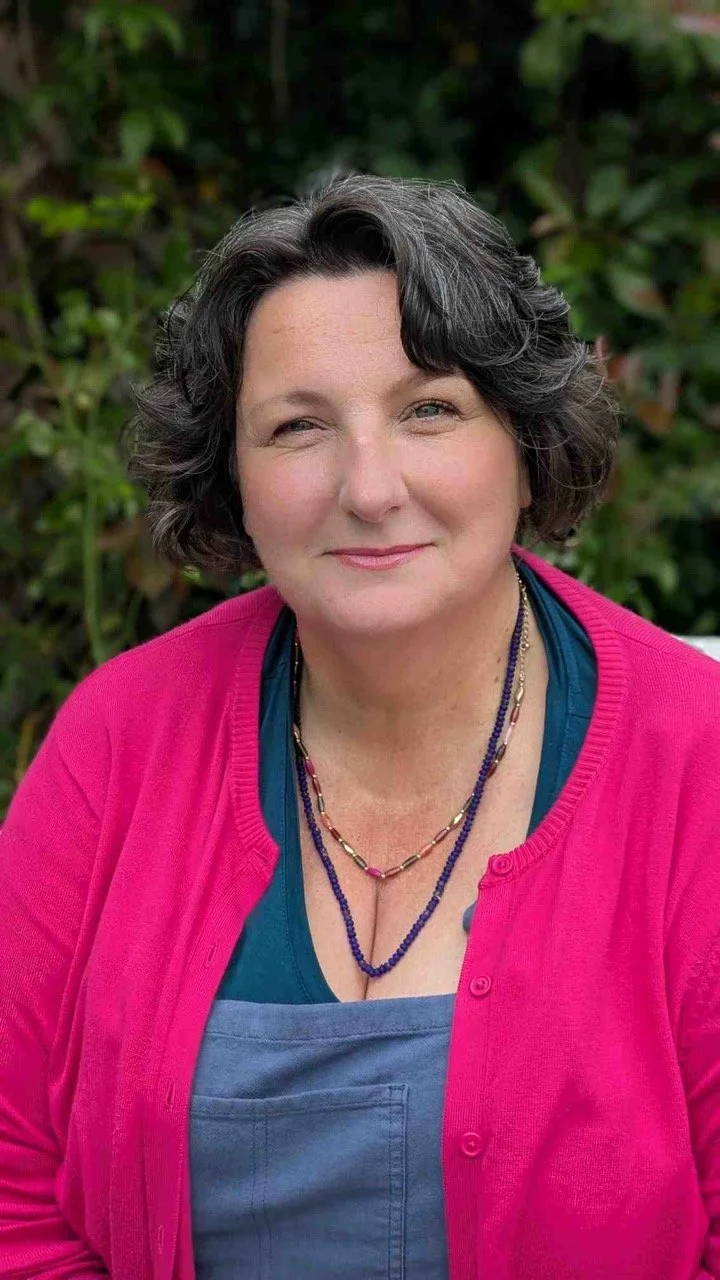
“The stories told about women like me, working class, on benefits, living in a council house, are wrong,” says Maya Jordan, author of Chopsy: The Resistance Tales of a Working-Class Woman. “More than that, the stories told about working class lives are damaging, and they hurt us.”
Maya was an obsessive reader as a child but was told in lots of ways that women like her don’t write. She told some stories, did some courses, and while doing her Masters in Creative Writing, applied for A Writing Chance - a programme launched by actor and writer Michael Sheen with New Writing North to support working-class and under-represented writers. That experience changed how she feels about herself as a writer and the value of her work.
Earlier this year, she published her acclaimed memoir Chopsy, which has drawn praise from Michael Sheen, comedian Daisy May Cooper, Wild Moon Rising author Jenny Knight and more. She will discuss the book at this year’s Margate Bookie on 17 October in conversation with poet Sarah Bowman.
Jordan’s overriding thought while writing Chopsy was, ‘I can’t be the only one. I can’t be the only one who thinks like this, who feels like this.’ She felt that stories being told about working class women were wrong. She wanted to articulate her world to find others who felt like she did.
How did your writing journey begin?
I was an obsessive reader as a child and was always writing little stories, but I had no notion that writing could be a thing for me, in fact, the opposite. I was told in lots of different ways that people like me, women like me don’t write.
But words have a way of escaping, so I told stories and did some courses, but I always felt like I was in the wrong place, cosplaying being a writer with people who had very different lives and experiences to mine.
I did a Master's in Creative Writing, and while that gave me space to take my writing seriously, even then I often felt like I was in the wrong room. Then a tutor suggested I apply for A Writing Chance with New Writing North and Michael Sheen, and that was like immersion therapy. Not only was I seen as a writer, as a creative, but I was in a room where my class, my exception, was not my defining feature. That experience changed how I felt about myself as a writer and the value of my work.
What inspired you to write Chopsy?
The overriding thought in writing the book was, ‘I can't be the only one. I can't be the only one who thinks like this, who feels like this.’
The stories told about women like me, working class, on benefits, living in a council house, are wrong. More than that, the stories told about working class lives are damaging, and they hurt us. They shape what kind of care we get, what services or education we can access. They shape how we feel about ourselves, in society, in the arts, in the world.
I wanted to reach out and articulate my world to find others - other women who felt like I did, who experienced the world as I did. It's hard to make connections when we feel invisible, when we feel like we’re the only ones. So, I wrote the book as a way to connect.
What does resistance mean in today's world?
I think for many of us, getting up and getting on with our day is an act of resistance. It’s hard not to feel overwhelmed and powerless in the face of daily outrages and atrocities.
Making connections with others, reaching out, women talking about their lives, their experiences- that’s where the opportunities for resistance lie. When we move from the individual experience to the collective, when we see that there are others who feel like us, who are experiencing the world in a similar way, that’s when resistance becomes power.
Who do you hope reads your book?
Honestly, even now I am amazed and thrilled that anyone reads my words. I love it when younger women contact me, telling me how much the book meant to them, and then they give the book to their mum. That’s an honour.
I hope that the book reaches people like me, women like me, which is why libraries are so important. Because we can't always afford to buy books. Going back to the last question, libraries are by definition an act of resistance. And myself in books, in stories, in the media. That made me feel invisible and isolated.
What is your advice to aspiring working class writers?
If you knit, you’re a knitter. If you bake, you are a baker. So, if you write, you are already a writer. Writing is not about publishing. Writing is about giving yourself time and permission to get words and stories down on the page. To know that it's not frivolous or silly.
Writing as a working class person, as a working class woman, is about giving yourself permission to see yourself as a creative. To see your work, your writing, as important.
‘We need to tell our own stories because when they tell them about us they always get it wrong.’ The world needs to hear your stories.
Keep writing. Make connections with other writers, with other working-class writers. Take up space. Let yourself be a writer; repeat it 10 times in front of a mirror: ‘I am a writer.’ Because if you write, you are a writer.
Maya Jordan will discuss Chopsy at Turner Contemporary on 17 October as part of this year’s Margate Bookie. Book tickets now.